
Every studio dreams of a blockbuster launch: servers packed, social media buzzing, and sales exceeding all expectations. Yet, for many multiplayer games, this triumphant peak is immediately followed by a steep and painful decline. Player counts can plummet just weeks after launch, leaving studios with a difficult dilemma.
The massive, costly server infrastructure required to handle the initial surge of players becomes a crippling financial burden as the community shrinks. The recent rise of games like Palworld, which saw its server costs balloon to a reported $6 million annually, highlights this extreme volatility. For many, this model is not just financially difficult - it's unsustainable.
What if there was a different approach? A model that protects you from these risks while building a foundation for long-term, sustained success? This is the strategic promise of Player-Owned Game Servers (POGS).
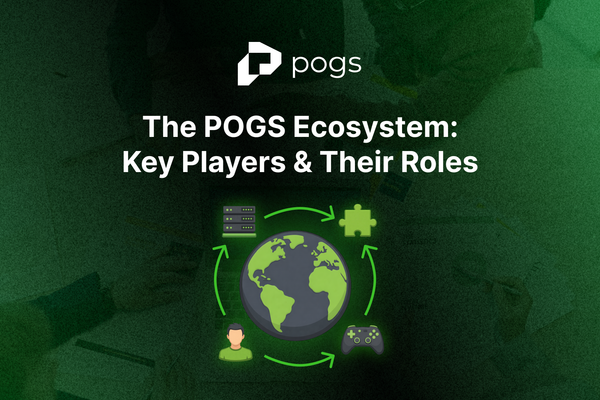
The POGS model is a fundamental shift in how we think about a game's community and infrastructure. It is based on the principle that the path to enduring popularity isn't found in centralized control, but in empowering your most passionate players. By giving them the tools to host their own servers, you transform them from consumers into stakeholders.
They are no longer just playing your game; they are building worlds, curating unique experiences, and actively recruiting friends to join their community. This creates a powerful, decentralized network of advocates with a vested interest in keeping your game alive and growing.
This article is a blueprint for achieving true game longevity. We will explore how POGS turns the traditional launch-and-decline cycle on its head, creating a thriving ecosystem that can secure your game's legacy and financial success for years to come.
Building a Self-Sustaining Player Ecosystem
In the volatile landscape of modern gaming, studios constantly battle against declining engagement curves. POGS offers a powerful solution, not just by eliminating infrastructure costs, but by fundamentally redesigning the social fabric of your game to create lasting popularity and organic growth.
At the heart of the POGS advantage lies the power of personal connection. Unlike anonymous matchmaking, player-owned servers cultivate smaller, intimate communities. Players return to the same servers, interact with familiar faces, and forge genuine social bonds.
These persistent social structures create an incredibly powerful 'hook'. Players become deeply invested in their server, their shared history, and their friends. This human element significantly increases retention, transforming fleeting interest into unwavering loyalty and keeping them active in the game's ecosystem.
Furthermore, POGS unlocks an unmatched level of player control, which directly fuels engagement. Every server is a unique ecosystem with bespoke rules, mods, and custom settings. This freedom empowers players to find, or even create, their ideal gaming environment.
This choice is critical. It ensures your game remains relevant to a broader spectrum of players, allowing diverse communities to flourish. The ability to discover fresh ways to play dramatically enhances replayability and keeps the game feeling perpetually new.
Beyond customization, POGS addresses a crucial aspect of global multiplayer: geographical accessibility. While studios offer servers in limited regions, player-owned servers can spring up anywhere in the world, ensuring players can always find a low-latency server close to them.
This also fosters the rise of local communities, expanding your game's reach into underserved areas and strengthening its global footprint, making it truly accessible and popular worldwide.
Ultimately, these benefits combine to form a powerful marketing force: the 'Community Flywheel'. Deeply engaged players become enthusiastic advocates for your game, inviting friends and sharing their experiences on social media. This grassroots marketing is powerful and cost-effective, driving continuous player acquisition and cementing your game's legacy.
The Infinite Content Engine: Replayability Through UGC
One of the greatest challenges in live service games is the relentless pressure to produce new content. This "content treadmill" is risky; in the quest to add more, it's easy to lose sight of the game's core magic. A single misguided update can alienate the very community it was meant to excite.
The POGS model, combined with a healthy UGC and modding scene, provides a powerful solution. It creates a framework for near-infinite replayability without compromising the game's soul.
The core principle is a strategic shift: the studio becomes an enabler of community innovation. Through UGC and mods, players can customize, expand, and reinvent the game on their own terms. This effectively outsources R&D to your most passionate fans, allowing countless variations of your game to coexist peacefully.
Minecraft stands as a testament to this model's power. Its longevity is due less to its official updates and more to the freedom it gives players to ignore them. When the controversial "Combat Update" was released, it fractured the community. In a traditional game, this would be forced on all players, risking a mass exodus.
Because of its decentralized POGS structure, large parts of the community simply chose to stay on older versions. To this day, Hypixel, the largest Minecraft network, famously runs on version 1.8.9. This freedom of choice was the feature that allowed the game to survive a potentially fatal creative decision.
Beyond mods, POGS unlocks a brilliant strategy for regular resets: the planned reset. Permanent worlds can eventually stagnate. Rust, a master of the POGS model, sees a massive player spike on "wipe day" - when servers reset progress and put everyone on a level playing field. This monthly rebirth recaptures the exciting early-game experience.
Similarly, RuneScape's seasonal "Leagues" - fresh-start servers - have brought the game to its highest-ever player counts. These events prove that for many players, the journey is more rewarding than the destination. By embracing POGS, you provide the tools for this renewal, ensuring your game remains endlessly replayable.
Passive and Persistent Profit: The POGS Business Model
For decades, the financial model for multiplayer games meant the studio shouldered the high cost of running servers. The POGS model completely reverses this dynamic, transforming the backend from a costly liability into a passive profit center. The key is to empower a thriving creator economy - and participate in its success.
The foundation of this "forever" model is aligning the studio's financial incentives with its community. By allowing players to monetize their servers and mods, you create a powerful entrepreneurial drive. When they succeed, you succeed.
This is primarily achieved through a low-friction, highly scalable revenue-share strategy. Instead of building complex systems yourself, you partner with established platforms and take a percentage of the revenue.
This can be broken down into three core partnerships:
- Game Server Providers (GSPs): Partner with leading GSPs to receive a percentage of every server rented for your game.
- In-Game Commerce Platforms: Integrate with services like Tebex to receive a small transaction fee from every purchase made across all servers.
- Modding Platforms: Collaborate with platforms like Overwolf/CurseForge to share in ad revenue or commissions from premium mods.
While empowering the community is the primary engine, the studio can still offer its own official services. The most effective approach is an "official" server hosting solution, akin to Minecraft Realms, where players purchase a server directly from you.
You can even partner with a GSP to provide a white-label game server hosting service, ensuring reliability while you focus on the player experience.
This dual approach is the key to this powerful financial model. You create a broad, passive revenue base from the community economy while offering a premium, first-party option. This diversified model ensures that even if active development ceases, the game can continue to thrive and generate revenue for years to come.
Creating a "Forever Game"
The traditional path for a multiplayer game is one of a finite lifespan, defined by a bright launch that slowly fades. We have laid out a blueprint for a different path - a strategy that trades the risky, centralized model for a resilient foundation built on community empowerment.
This blueprint stands on three pillars: a Community Flywheel that ensures persistent popularity, an Infinite Content Engine that future-proofs the game, and a "Forever" Revenue Model that converts costs into passive income.
This is not a theoretical model; it is a proven formula for success. Look at the legacies of games that embraced this philosophy. Minecraft remains a global phenomenon because of its millions of player-owned servers. Garry's Mod continues to thrive nearly two decades on, a testament to a truly empowered community.
These titles are not outliers; they are the proof of what is possible. Achieving true longevity requires a fundamental shift in perspective: from being a game developer to being an ecosystem builder.
The question is not simply what game to build next, but what community you will empower. By placing the tools of creation, community, and commerce into the hands of your players, you are not just launching a game - you are seeding a legacy.